
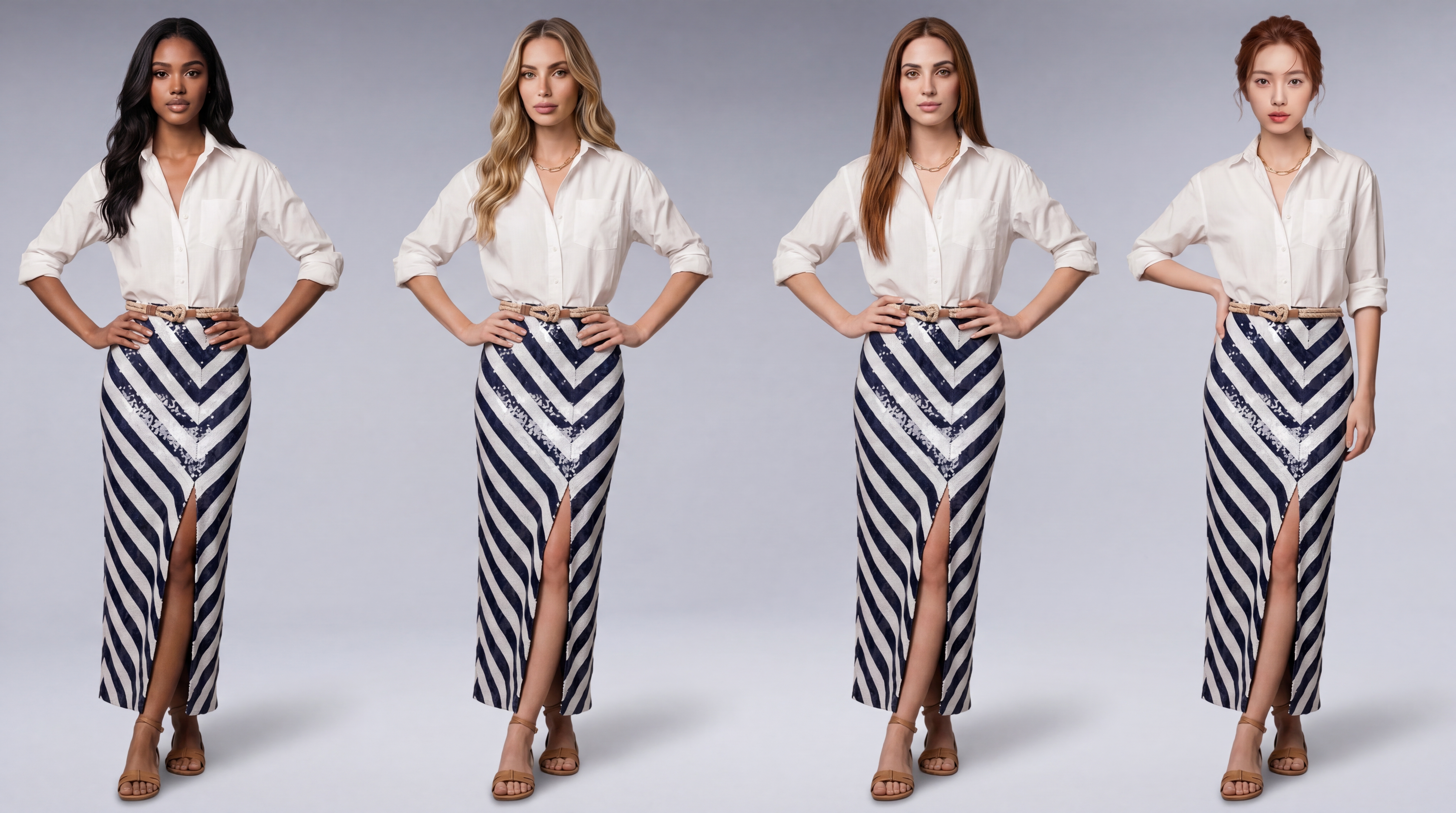
Personalised content drives 10–15% revenue increases for e-commerce retailers, yet traditional photography makes producing it at scale financially impossible. More markets mean more models, more shoot days, and budgets that spiral out of control.
Below, we'll look at why the old way runs out of road, why the popular AI image tools don't really fix it either, and how ComfyUIFlows Studio gives brands a full production pipeline for diverse, market-ready content at a fraction of the usual cost.
Why Traditional Photoshoots Can't Deliver Personalisation at Scale
The Cost-Volume Problem
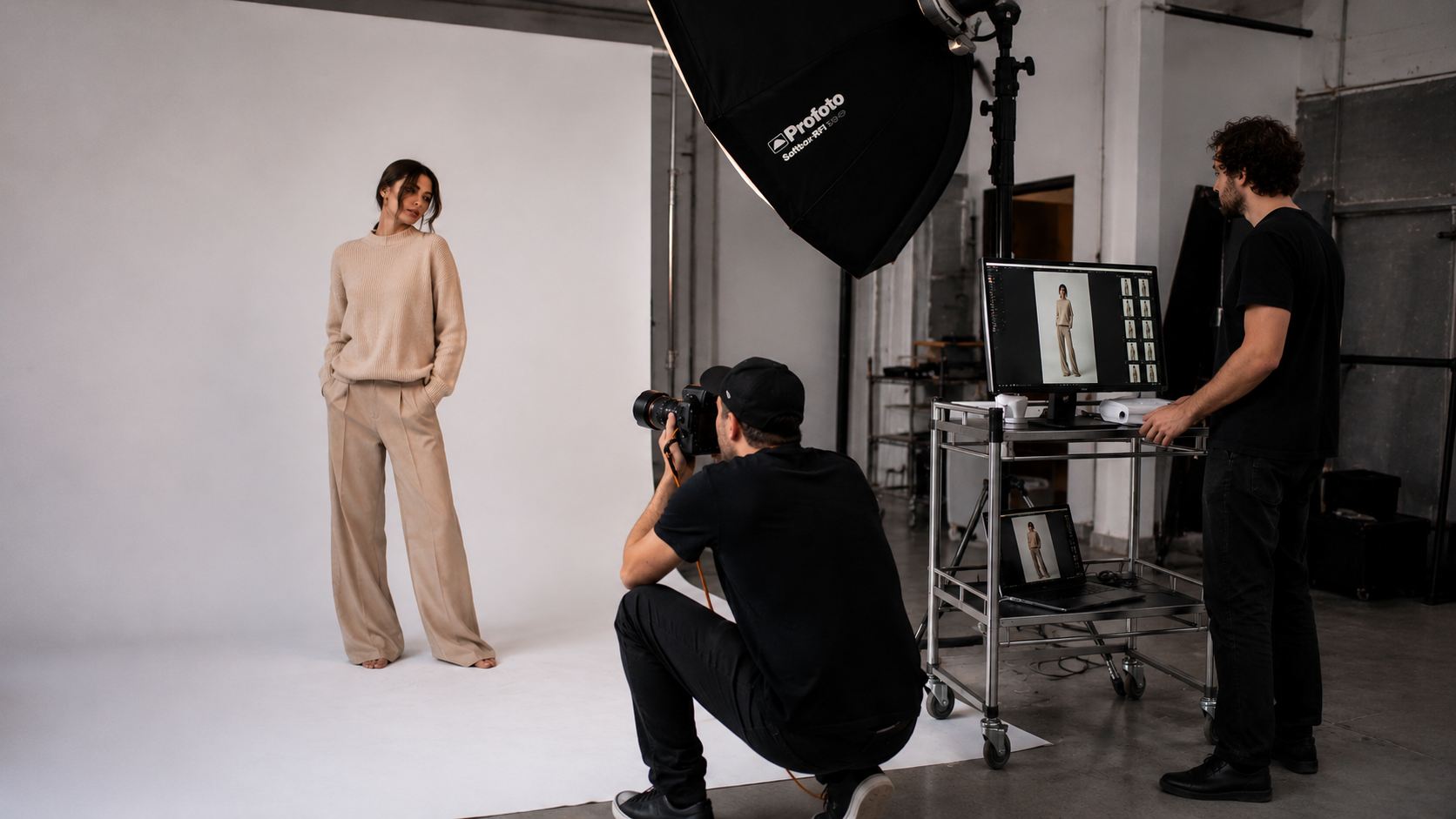
Every new market, body type, or demographic segment means another round of studio bookings, model fees, hair and makeup, sample shipping, and retouching. For a brand serving 10 markets with 5 model demographics each, you're looking at 50× the production overhead compared to a single-market catalogue.
Most brands can't afford this, so they compromise — publishing the same imagery everywhere and accepting lower conversion rates in markets where the content doesn't resonate.
Sourcing Models for Every Market Is Expensive — or Impossible
International brands face a persistent gap: the models available through agencies rarely reflect the full diversity of their customer base. Finding models that match specific regional demographics (age ranges, body types, skin tones, cultural styling) is difficult, expensive, and in many smaller markets simply not feasible.
Regional teams know they need locally relevant content. But commissioning local shoots means navigating approval cycles with HQ, booking studios in unfamiliar markets, and coordinating logistics that most teams can't sustain.
Niche Categories Are Even Harder
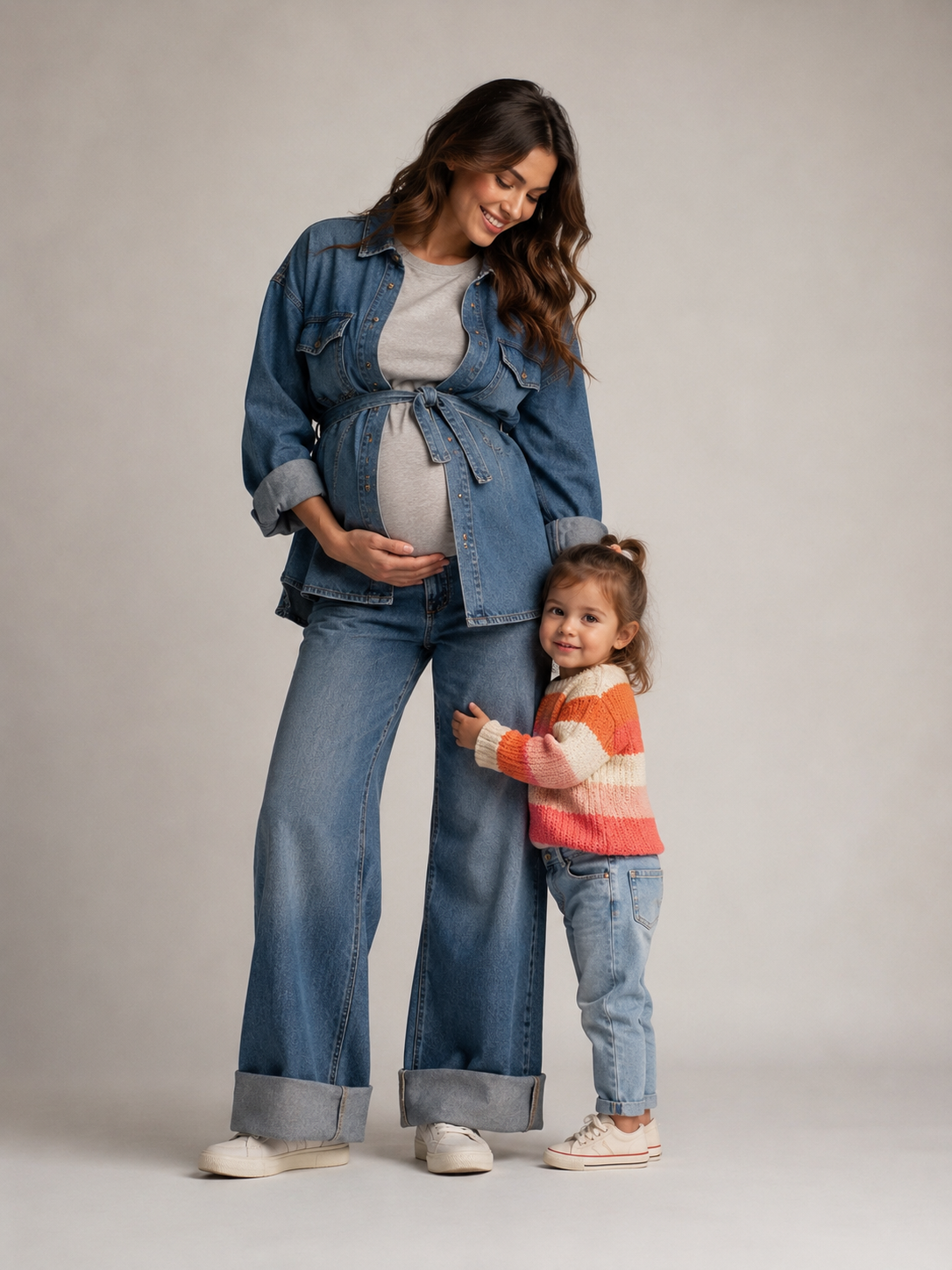
Some product categories present particular challenges regardless of geography:
- Maternity wear: pregnant models are hard to source and expensive to book
- Children's wear: legal compliance, scheduling complexity, and handling requirements add layers of cost
- Plus-size and adaptive clothing: model availability is limited in many markets
- Age-specific demographics: brands targeting customers over 40 struggle to find models that match their ideal customer profile
Many brands simply avoid producing content for these categories altogether — leaving revenue on the table.
Why Generic AI Tools Fall Short
Brands that have experimented with general-purpose AI image generators like Midjourney or basic text-to-image tools quickly discover fundamental limitations:
No Consistent Model Identity
Generic tools can generate diverse models, but they cannot maintain the same face, body proportions, or identity across a 200-SKU catalogue. Over hundreds of images, subtle shifts in facial features destroy the coherent brand presence that drives trust and conversion.
No Reusable Brand Avatars
Building a recognisable "house model", the virtual face customers start to associate with your brand, is impossible with tools that start from scratch on every generation. You can't build brand equity around a face that changes with every prompt.
Localisation Doesn't Scale
Generating individual localised images with careful prompting works for 5 images. It breaks completely at 500. The manual oversight and quality control required makes it commercially unviable for high-volume production.
Post-Production Erases the Savings
Garment accuracy issues, inconsistent backgrounds, anatomy errors, and framing problems all require manual correction. The time savings that generic tools appear to offer largely disappear in post-production — making them no cheaper than traditional photography at scale.
How ComfyUIFlows Studio Solves Personalisation and Localisation
ComfyUIFlows Studio provides a complete AI content production pipeline: not a single tool, but an integrated system that handles every stage from model creation to final 4K delivery.
1. Custom AI Model Training (LoRA)
At the core of our approach is the ability to train custom AI models (LoRAs) built to your exact specifications:
- Upload 20–40 reference images of your ideal model (real person or AI-generated)
- Our Auto-Caption tool processes the dataset automatically
- The Model Training Studio produces a reusable LoRA file in 2–3 hours
- Your trained model maintains perfect identity consistency across unlimited generations
Unlike generic tools, your LoRA model is a permanent, reusable brand asset. Train once, generate forever — across every product, every market, every season.
2. Diverse Model Demographics Without Extra Cost
Need to represent different body types, ages, skin tones, or regional demographics? Train separate LoRA models for each persona:
| Persona | Use Case | Training Time | Cost |
|---|---|---|---|
| Young professional (25–35) | Urban fashion, workwear | 2–3 hours | ~3000 credits ($30) |
| Mature elegant (40–55) | Premium collections | 2–3 hours | ~3000 credits ($30) |
| Athletic build | Athleisure, activewear | 2–3 hours | ~3000 credits ($30) |
| Plus-size model | Inclusive sizing range | 2–3 hours | ~3000 credits ($30) |
| Regional demographic | Market-specific content | 2–3 hours | ~3000 credits ($30) |
Each model can then generate unlimited images across your entire catalogue. The marginal cost per image drops to near zero.
3. Virtual Try-On: Real Garments on AI Models
Our Virtual Try-On and Flat Layout Designer tools let you place real clothing photography onto your trained AI models. Upload a flat-lay photo of the actual garment, and the AI maps it onto the model with:
- Accurate fabric texture and pattern preservation
- Natural draping, wrinkles, and fit
- Consistent lighting and shadow matching
- Logo and branding fidelity
One flat-lay photo + multiple trained models = complete market coverage from a single product image.
4. Instant Background Localisation
Our Scene Styling and Change Background tools let regional teams adapt centrally produced content for their local market in minutes:
- European market? Parisian café, cobblestone streets, minimalist interiors
- Middle East? Luxury marble interiors, desert sunset, modern architecture
- South Asia? Vibrant marketplaces, traditional settings, festival environments
- North America? Urban lofts, beach boardwalks, studio clean-white
No separate shoots. No HQ approval cycles. The same model, the same garment, localised for any market in hours.
The Numbers: What Brands Actually Save
Cost Comparison: 10 Markets × 50 SKUs
| Cost Item | Traditional Photography | ComfyUIFlows Studio |
|---|---|---|
| Models (10 demographics × 2 days) | $16,000 | $50 (LoRA training) |
| Studios (10 locations) | $5,000 | $0 |
| Photographers | $15,000 | $0 |
| Hair, makeup, styling | $4,000 | $0 |
| Sample shipping to 10 locations | $2,000 | $0 |
| Post-production retouching | $5,000 | $0 |
| AI generation (500 images) | $0 | ~$200 |
| Total | $47,000+ | ~$250 |
That's a 99.5% cost reduction: and the AI models are reusable for next season at zero additional training cost.
Speed Comparison
| Task | Traditional | AI Pipeline |
|---|---|---|
| Model sourcing & booking | 2–4 weeks | 2–3 hours (LoRA training) |
| Shoot days (10 markets) | 20–30 days | 0 days |
| Post-production | 2–3 weeks | Built-in |
| Localisation per market | 3–5 days per market | 1–2 hours per market |
| Total time-to-market | 8–12 weeks | 1–2 days |
What Brands Gain from AI-Powered Personalisation
Higher Conversion Through Representation
When customers see a product on someone who looks like them, close in age, body type, and cultural context, conversion goes up in a way you can actually measure. Showing a garment on five different body types tells a shopper far more about fit and styling than one model ever could.
Fewer Returns, Lower Costs
According to industry research, three-quarters of online clothing returns cite fit issues, and more than half say the product didn't match what they saw online. Better imagery across more body types directly addresses both problems — reducing return rates and the logistics costs that come with them.
Smarter Model Decisions with A/B Testing
With AI-generated model personas, brands can test which demographics drive the highest conversion for specific product categories — without committing to expensive shoot days to find out. Run the same dress on 5 different model personas, measure click-through and conversion, then scale the winner.
Consistent Brand Identity at Any Scale
Unlike generic AI tools, your trained LoRA models are permanent brand assets. The same face, the same proportions, the same aesthetic — across 10 SKUs or 10,000. Creative directors maintain full control over the brand's visual identity without reviewing every individual generation.
Quick Answers to Common Questions
Can I use my own brand's existing model for AI training?
Yes. Upload 20–40 photos of your real model (different angles, poses, lighting) and train a LoRA that replicates their exact identity. You can then generate unlimited new images with that model's face and body — no additional bookings needed.
Does the AI preserve my actual product's fabric and branding?
Yes. Our Virtual Try-On and Flat Layout Designer tools work with your real product photography: the AI maps your actual garment onto the model, preserving fabric texture, colour, pattern, logos, and branding with high fidelity.
How many different model personas can I create?
Unlimited. Each LoRA training costs approximately 3000 credits (~$30) and produces a permanently reusable model. Most brands start with 3–5 personas covering their core demographics, then expand as needed.
Can regional teams use this independently?
Yes. With Team Workspaces, regional teams can access shared AI models and generate locally relevant content independently — no need to coordinate with central production. Credit allocation and usage tracking are built in.
What about images for difficult categories like maternity or children's wear?
AI model training eliminates the sourcing, legal, and logistics challenges of these categories entirely. Train a maternity model persona or child model persona once, and generate consistent imagery across the entire range — no scheduling complexity, no compliance overhead.
Get Started Today
Every tool mentioned in this article — LoRA Training, Virtual Try-On, Scene Styling, Background Replacement, and 4K Upscaling — is available right now in your ComfyUIFlows Studio dashboard.